Information checked: 25 November 2026.
Could a £4,000 deposit be enough for a £400,000 home? Under Nationwide’s new 1% deposit mortgage, it could be the deposit required for an eligible buyer. But the mortgage would still be £396,000, and the lender would need to be satisfied that the repayments are affordable.
Nationwide has announced a new Helping Hand 1% Deposit Mortgage for qualifying first-time buyers. It brings together a smaller deposit requirement and the possibility of borrowing up to six times income. That could make a difference if you have been saving towards a first home while paying rent.
The useful question is how the whole purchase would work for you: your income, the property, the monthly budget and the money you need beyond the deposit. Here is what to check before you start making plans.
What is a 1% deposit mortgage?
You contribute at least 1% of the purchase price and, if approved at that level, borrow the remaining 99%. This is a 99% loan-to-value, or LTV, mortgage. The 1% describes the deposit; it is not the mortgage interest rate.
| Home price | 1% deposit | Mortgage at 99% | 5% deposit for comparison |
|---|---|---|---|
| £300,000 | £3,000 | £297,000 | £15,000 |
| £400,000 | £4,000 | £396,000 | £20,000 |
| £500,000 | £5,000 | £495,000 | £25,000 |
These are deposit and borrowing calculations, not mortgage offers or payment quotations. They assume the lender accepts the property value used. Purchase costs are additional, and actual borrowing depends on the full assessment.
For the £400,000 example, the difference between a 1% and 5% deposit is £16,000. That reduces the savings needed for the deposit, but also means borrowing £16,000 more than a buyer putting down 5%.
Who could qualify?
Nationwide’s published customer information and intermediary criteria set out the following headline requirements:
| Check | Published position |
|---|---|
| Income | At least £30,000 for a sole applicant, or £50,000 combined for joint applicants. |
| Applicant status | Qualifying first-time buyers, aged 18 or over and UK resident. Both applicants must qualify when applying jointly. |
| Property | An existing house. Flats, new builds and listed buildings are excluded. |
| Leasehold houses | At least 90 years remaining on the lease. |
| Income source | Not available where the main income comes from self-employment. |
| Loan and term | Maximum loan £750,000; maximum term 40 years, subject to eligibility. |
| Mortgage structure | Capital repayment, with a five-year fixed-rate product. |
| Other schemes | Not available with Right to Buy, shared ownership or equity schemes. |
Meeting these headline conditions is the starting point, not an approval. Affordability, credit scoring, valuation and underwriting still apply. The £750,000 figure is the maximum loan, not a stated maximum purchase price.
Check the lender’s first-time-buyer definition
Nationwide’s first-time-buyer guidance refers to applicants who have not held a mortgage in the previous three years, including a mortgage outside the UK. All joint applicants must qualify. If you have previously owned property, inherited a share or held an overseas mortgage, explain that history to your adviser so the current rules can be checked against your circumstances.
Do not assume that qualifying for a lender’s first-time-buyer mortgage also establishes eligibility for property-tax relief. Ask your conveyancer to check the tax position separately.
Can self-employed buyers use it?
The dedicated product pages exclude applicants whose main income comes from self-employment. If you have both employed and self-employed earnings, the mix needs a case-specific check. A company director should also have their income classification confirmed before relying on the headline.
This restriction relates to this product. TLA can separately review mortgage options for self-employed applicants and company directors.
Does six times income mean I can definitely borrow that much?
No. Nationwide’s affordability criteria describe six times income as a maximum. The actual result depends on the application, including income, expenditure and the lender’s assessment. An income multiple is useful for an initial calculation; it does not replace an affordability check.
For a £400,000 purchase with a £4,000 deposit, the £396,000 mortgage would equal six times an annual income of £66,000. That calculation only works if the full income is eligible and the full multiple is available. Other commitments may reduce what the lender will offer.
Likewise, a couple earning the £50,000 minimum joint income would reach £300,000 of borrowing at six times income. They would still be £96,000 short of the mortgage in the £400,000 example. The minimum income threshold and the income needed for a particular home are different questions.
Tell your adviser about loans, credit cards, childcare and other regular commitments early. Our guides to car finance and mortgage affordability and mortgages with a student loan explain two common points buyers raise.
Is the deposit all the money I need?
You will need a separate buying budget. MoneyHelper’s guide to buying and moving costs explains why legal work, searches, surveys, moving costs and any applicable property tax need to be considered alongside the deposit.
Before committing, ask for a breakdown of the costs relevant to your purchase, including any lender or adviser charges. Keep room in your budget for buildings insurance, household bills and early repairs. A small deposit does not remove the running costs of owning a home.
TLA’s practical suggestion is to work with three figures: the deposit you can evidence, the separate cash available for purchase costs, and a monthly housing budget you would feel comfortable maintaining.
Understand the risk of negative equity
With a 1% deposit, you start with very little equity. Negative equity means the outstanding mortgage is larger than the property’s value. It can make selling or moving to another lender more difficult.
For example, suppose a £400,000 home falls in value to £380,000 while the mortgage balance is still £396,000. The gap would be £16,000. This is a simplified illustration: it excludes any capital repaid, selling costs and mortgage charges.
That possibility deserves particular thought if you expect to move again soon, change jobs or need a larger home. Paying down the mortgage can improve the position over time, but future house-price growth should not be assumed.
How should I compare the monthly cost?
Ask for a mortgage illustration based on the current product, your proposed borrowing and an appropriate term. Review the monthly payment during the fixed period, the position afterwards, fees, early repayment charges and conditions, and the overall cost. The smallest deposit is not automatically the best fit.
The advertised maximum term is also a limit, not a recommendation. Compare different terms against your age, future plans and budget. A longer term spreads repayment over more years, which can reduce the monthly amount but normally increases total interest if other assumptions stay the same.
If a larger deposit is realistic, compare that route too. MoneyHelper explains that a bigger deposit can widen the choice of mortgage deals. Ask an adviser to compare your available options rather than assuming a particular deposit size must be best.
Three questions buyers often ask
Can my family give me the deposit?
Nationwide’s product criteria allow gifted deposits subject to its usual rules. Tell your adviser who is providing the money and whether it is a gift or a loan. Our gifted-deposit guide explains what to discuss before money is transferred.
Can I use it to buy a flat?
The published criteria exclude flats, as well as new builds and listed buildings. If one of those is the property you want, ask TLA to review other mortgage options before changing your plans.
Can I apply through TLA Finance?
Nationwide confirms that this mortgage is available through brokers on an advised basis. TLA can review your circumstances, check the current criteria and compare suitable first-time-buyer mortgage options. A decision in principle is an early assessment; a full application and property checks still follow.
Find out whether your deposit could be enough
If saving a deposit has been holding you back, a review of your options may be useful. To start the conversation, tell us:
- Whether you are buying alone or jointly, and any previous property or mortgage history.
- Your employment basis, approximate annual income and existing monthly credit commitments.
- How much you have available for the deposit and separately for buying costs.
- The type of property, target price and area you are considering.
Call 01494 325 625, email info@tlafinance.com or request a callback from TLA Finance. Please provide a brief outline initially; we will explain how to supply any supporting documents securely.
Your home may be repossessed if you do not keep up repayments on your mortgage.
This article provides general information, not a personal mortgage recommendation. Mortgages are secured on your home. Product availability and lender criteria can change. All applications are subject to affordability, credit assessment, valuation and underwriting.
TLA Finance Ltd is authorised and regulated by the Financial Conduct Authority, reference 304214. We are a credit broker, not a lender. Any advice charges and the nature of lender commission will be explained before you proceed.
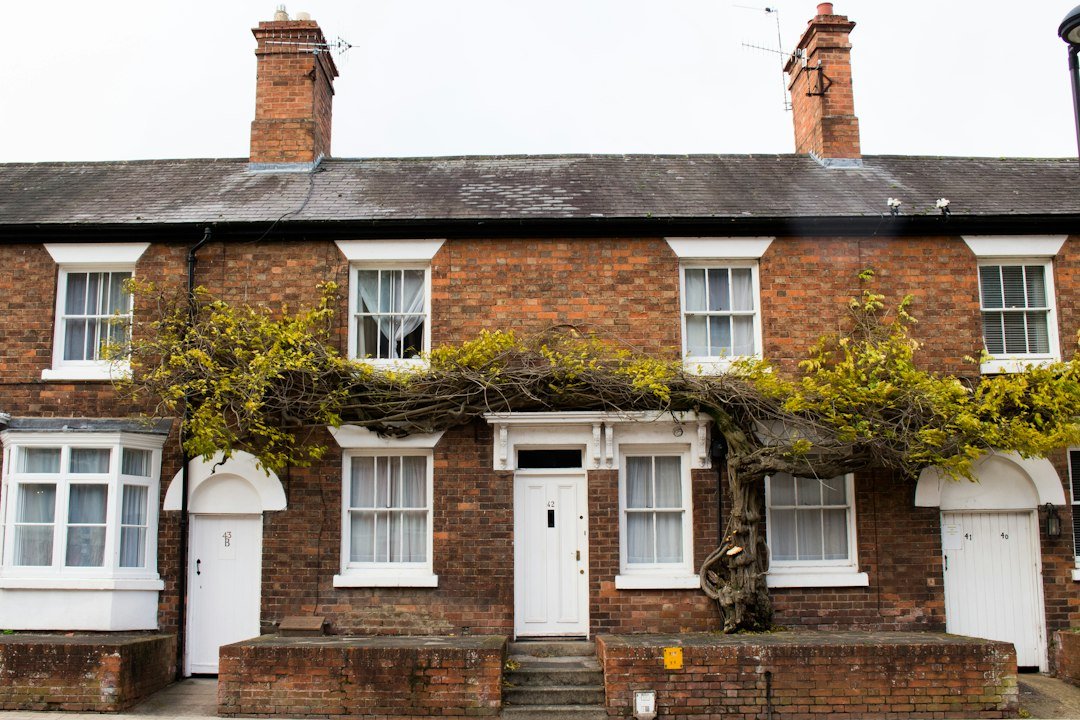
Photograph of existing homes for illustration only; it does not establish mortgage eligibility. Photo by Kirsten Drew on Unsplash.